5 Things You Will Never Learn at College

1.  Talent is vastly overrated.  Every single human being has talent.  It’s what you do with it that matters.  Rehearsing, practising, training, learning… that’s what really matters.  Don’t leave expecting doors to open just because of your brilliance… expect to have to develop personally, academically and in character for the rest of your life.

2. Networking is not overrated.  You need mentors, you need good friends, you need patrons.  It is about who you know.  IQ is important, but in this generation your RQ is what will make the difference in your life.  Ministers in particular leave Bible colleges knowing a hundred things ABOUT grace but not knowing how to show grace.  An hour of seeing something modelled is worth 6 months of education.

3.  Technology is overrated.  If the internet is down don’t ask your boss to go home!  Get on the phone.  Business is still done face to face and person to person. Technology is an awesome tool but a lousy boss.  Make sure you use technology but are never owned by it.  Get in front of people.

4.  Experience is not overrated.  I just heard a young bible school graduate who applied for a senior pastors job.  When experience was brought up he (rather foolishly) said that college gave him all the experience he needed.  It takes 3 years to become an expert in a skill or job, so if you are fresh from college have a little humility.  It is also a good idea, depending on profession, to ensure you find a company you can stay three years with.  Not only will it help you it will help your CV.

5.  You are overrated.  Or more accurately you learn to rate yourself on things in college that the real world does not care about.  Be aware that you are going to get into a place where things are different.  Go humbly, go flexible, go with a learning attitude.  You haven’t ended your learning process by finishing college, you have only just begun.

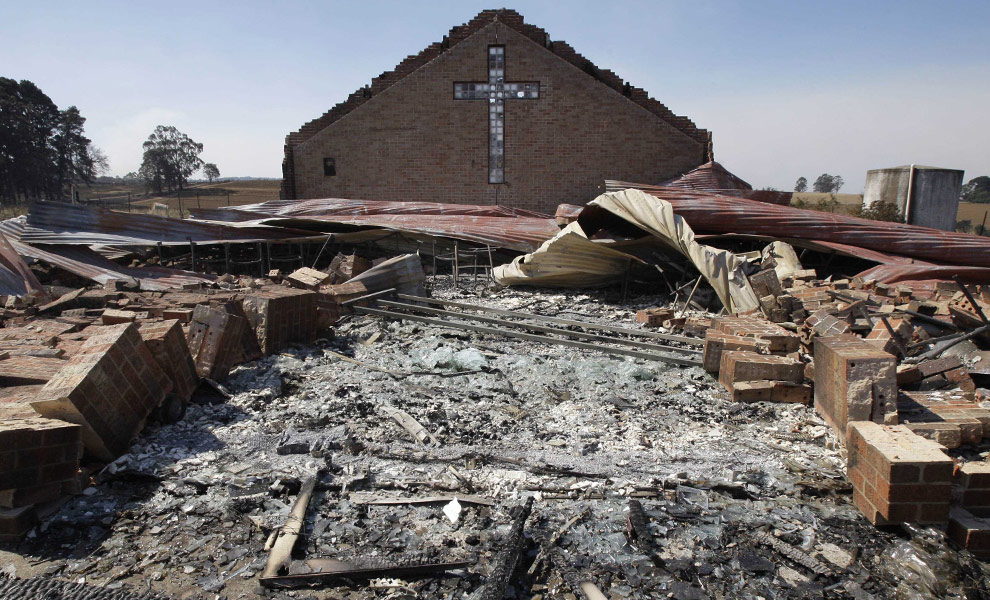
10 Ways to Destroy a Church

Image

10.  Never be willing to do anything to help.  See the church as a provider of a service, not a community you are part of.  Never step up to taking responsibility, always see yourself as a tenant not an owner!

9.  Expect everyone to notice you and what you contribute.  If they fail to notice you, get stroppy with them for being so selfish and not noticing all you do to make things happen.  If they still fail, withdraw from the group until someone contacts you and asks how you are and makes a big fuss over you.

8.  Always speak to the people you know.  Never speak to new people in case they find us friendly and then decide they want to hang around – then where would we be?

7.  Be very intolerant of people who don’t know how we do things around here.  Our unspoken dress code, our order of service, even how we make a cup of tea and coffee, where cables go at the end of the church.  Make sure these people are told in no uncertain terms that they have done something really foolish and that everyone thinks they look ridiculous.

6.  Make sure you put other people down and criticize their contributions, their ideas, their style.  Otherwise how else is anyone going to know how amazing you are?  Your candle will surely burn brighter if you blow everyone elses’ candles out. 

5.  Be unpunctual.  It’s only 5 minutes of your time – so don’t ever think that if 20 people are waiting for you to arrive that’s 100 minutes you have wasted.  it is important not to think of other people here, but only yourself – otherwise you might stop being selfish, arrive on time and actually contribute to moving things forward.

4. Always take on more than you cope with – and when you serve be like Martha – rush about, get upset at people not serving, get bitter and angry and then boom – you lose your relationship with the Lord, and make other people feel guilty.  It might not help the community grow, but it will make you feel better and superior too.  That’s what it’s all about – that’s the only reason to serve.

3. Look for things to criticize.  You will find them.  In any church, you will find them.  Make sure you don’t look at all the work the church is doing, all the exciting things that are happening, all the good that is being done.  Look for the crack in the wall, don’t praise God for the wall.  When your looking at the cracks, you don’t get inspired and challenged by the wall.  You don’t get excited by all the things happening in the building.  You keep focused on the cracks.  But the good news is that you get a reputation in the church as the crack expert.  When people want to know what is going wrong, they come to you.  You get a lot of admiration being the crack expert and the great news is this – it’s the easiest job in the church.  Getting involved in the building, mixing cement, laying bricks, working as a team – that’s too much like hard work.  No – watch the builders build, notice when they get it wrong and let others know (loudly).  That is an easy job and an easy pathway to making friends and having a following.  (NOTE: please don’t take the time to ever consider that if you choose this path all your friends are backstabbing gossips.  Just be glad that they are listening to you and feed your power base).

2.  Make sure you tip the church.  About £1 per service is about right, maybe £2 or £3 if the message is amazing.  That way you dull the feeling inside that you should contribute to the financial health of the church, and that giving to the church is part of being significant.  There are a whole bunch of internet sites, mostly written by people who don’t go to church about how the tithe is obsolete, giving to churches is wrong and you should keep your money and spend it on yourself.  Spend lots of time reading these sites in case you start giving significant amounts so the church can blaze forward and impact the world.  Every time the preacher gets a new suit or car, think all about your suits and cars that you don’t have and hold back on your giving.  Remember – it’s someone elses’ job!

1.  Never, ever be disciplined about going.  It’s been a busy weekend?  Skip church on Sunday.  Stay in bed.  Play a board game with your children – tell yourself that you are doing it for them (don’t consider that you are training them to skip church when you are tired, and that might not be a good habit to instill in a child).  It’s been a hard day at work?  Don’t go to Living Church.  They won’t miss you.  You can read the Bible yourself (don’t consider that you never do during those times).  You don’t need fellowship to advice.  Go when you feel like – and tell yourself it what Jesus wants.  Again, there are loads of websites written by people about how church is institutional, sets you back in your Christian faith and a whole host of other things.  Start to see church as an optional extra that fits into your life, not the bedrock of your Christian life.  

DIG for Tuesday the 1st of October…..want peace; follow the “Philippians model” then, well almost……Philippians 4 v 7

DIG for Tuesday the 1st of October…..want peace; follow the “Philippians model” then, well almost……Philippians 4 v 7.

Great post on peace by a great pastor and good friend from Scotland.  Enjoy!

10 Scriptures that Can be used in nearly every mess

Image


We often learn lists of healing Scriptures, finance Scriptures, family Scriptures, etc. so that in specific crises we know what the Word says.  But if you are a new Christian or if you don’t know the Word as well as you should, or if you are facing multiple battles at once it is great to know that there are some Scriptures that will apply to EVERY situation.  These Scriptures should be learned, considered, meditated and declared in every mess you find yourself in.

10.  Greater is He that is in you, than He that is in the world. (1 John 4.4)

9.  My God shall supply all my needs according to His riches in glory (Php. 4.19)

8. If God is for us, who can be against us? (Romans 8.31)

7. He who did not spare his own Son, but gave him up for us all—how will he not also, along with him, graciously give us all things? (Romans 8.32)

6. We are more than conquerors through him who loved us (Romans 8.37)

5. So then they which be of faith are blessed with faithful Abraham. (Gal. 3.9)

4.  Christ hath redeemed us from the curse of the law, being made a curse for us: for it is written, Cursed is every one that hangeth on a tree: (Gal. 3.13)

3. Behold, what manner of love the Father hath bestowed upon us, that we should be called the sons of God: therefore the world knoweth us not, because it knew him not. (1 John 3.1)

2. Therefore, having been justified by faith, we have peace with God through our Lord Jesus Christ, through whom also we have access by faith into this grace in which we stand, and rejoice in hope of the glory of God.  (Romans 5.1-2)

1. Now thanks be to God who always leads us in triumph in Christ, and through us diffuses the fragrance of His knowledge in every place. (2 Cor. 2.14)

10 Things You Have to Know About Growing Churches

Image


10.  Growth is like human growth – in spurts.  You can account for it, plan for it, prepare for it, but you can’t ever quite predict it.  You know a healthy human child will grow, but you don’t know EXACTLY when.

9.  Growth means change.  You don’t like change – no one does.  We like our security and safety.  BUt things must change – things you can do in a church with 15 people (interrupt the sermon, share a Scripture, celebrate your birthday, stop the service and pray for you, be informal about management of money or children, as examples) simply cannot be done with a church of 200.  

8.  Remember the change isn’t for you!  You might like your church and not want to share it with 200 other people but God wants to share the life in the church with as many people as possible.

7.  One of the hardest barriers for a church to cross is around 140-160 people.  It’s when you simply cannot know everyone in the church just by going on a Sunday.  On a subconscious level people find that difficult to deal with.  The best thing to do is to join a smaller group – a Living Church, the choir, the working party, the set up team, whatever.  By being in a smaller group within the group, you still get the benefits of being in a group where you know everyone and you also get the benefits of being in a larger group.  If you are a pastor to break this barrier you simply must provide the smaller groups for people – if you don’t they’ll form themselves and become cliques.

6. Growing churches will always become more formal.  It used to be that you knew the people looking after the children, you knew everyone so processes were informal.  That cannot stay the case if the church grows.  Sometimes we mistake formalization for depersonalization.  No – it’s just ensuring the processes are robust enough to see more people come.  Formalization is the only way to ensure the church becomes more personal and more welcoming.  By taking the pressure of structure off the people and onto the structures and processes, the people are now free to relate to one another and enjoy church.

5. In growing churches, paid staff often do what volunteers used to do.  Volunteers have to get used to having a line manager who is not the senior pastor and main preacher.  Volunteers have to get used to having certain responsibilities taken off them and let it happen graciously.  

4. In a small church the drawing factor is community.  People are part of the small community and that’s why they keep coming back again and again.  The problem is that this community is exactly what is unwelcoming to newcomers.  Every slot is filled – you can only have so many friends.  Occasionally someone leaves the church and someone joins and fits in their place, but it will not grow.  In a growing church the drawing factor is life impact.  It is how someone’s life is being changed.  Therefore the service has to not pander to the community but embrace everyone and provide powerful ways to improve life impact.

3. In a small church certain things are tolerated because of good relationships.  Someone can ramble on in a sermon for an hour and everyone knows “That’s just Bill…”, the worship leader can sing out of key and out of rhythm and everyone giggles because it’s how Jimmy plays.  The low quality is almost an in-joke that sustains the community.  As soon as a church breaks 100 this cannot happen anymore because there will be people who are not in on the joke and have a higher expectation.   Everything must be done professionally, from the first opening song through to the notices, the offering and so on.

2. A growing church needs multiplicity and redundancy of communication.  I knew this intellectually but didn’t really believe it until recently when Tree of Life Dagenham started hitting 110-120 per Sunday.  People would call me and say “why didn’t you tell me about THIS EVENT?”, “why didn’t you let me know THIS SPEAKER was coming?”, “how come I didn’t know about the BAPTISMS?” when these things were clearly in the church newsletter and announced from the front for several weeks.  Because the church is no longer one community – things need repeated.  We now try and say a notice in six different ways: we email everyone personally, we text everyone, we put it on Facebook, we put it on the church website, we put it on Google calendar and we put it in the church newsletter.  No one listens to the notice, so we stopped doing them on a Sunday.   If you are reading this and thinking I am into overkill, you are where I was this time last year.  Let me know what happens when your church reaches 120+.

1. A Growing Church is the most exciting place on earth.  In the age where church attendance is seen as an optional extra for supersaints (or worse – and even more absurdly, institutional legalism for people who don’t get the grace message), being in a healthy, growing church is so much fun.  Marriages are getting restored, Muslims are becoming Christians, children are getting saved, people are getting healed, people are learning how to dream, how to walk in their dreams,community is being built.  Lives are being changed.  I wouldn’t change what I do for the world.  It’s not always easy, but it is always an adventure.

Imagination

Pastor Benjamin Conway, lead pastor of Tree of Life Church and founder of the Tree of Life Network, shows here how to use your imagination to enter fully into God’s dream and your dream for your life. This message is inspiring and challenging and will let you be all you can be!